What is Respirable Crystalline Silica?
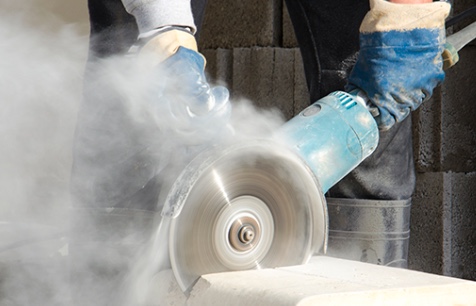
Crystalline silica is a common mineral that is found in construction materials such as sand, stone, concrete, brick, and mortar. When workers cut, grind, drill, or crush materials that contain crystalline silica, very small dust particles are created. These tiny particles (known as “respirable” particles) can travel deep into workers’ lungs and cause silicosis, an incurable and sometimes deadly lung disease. Respirable crystalline silica also causes lung cancer, other potentially debilitating respiratory diseases such as chronic obstructive pulmonary disease, and kidney disease. In most cases, these diseases occur after years of exposure to respirable crystalline silica.
How are Construction Workers Exposed to Respirable Crystalline Silica?
Exposure to respirable crystalline silica can occur during common construction tasks, such as using masonry saws, grinders, drills, jackhammers and handheld powered chipping tools; operating vehicle mounted drilling rigs; milling; operating crushing machines; using heavy equipment for demolition or certain other tasks; and during abrasive blasting and tunneling operations. About two million construction workers are exposed to respirable crystalline silica in over 600,000 workplaces.
What is Table 1?
Table 1 matches 18 common construction tasks with effective dust control methods, such as using water to keep dust from getting into the air or using a vacuum dust collection system to capture dust. In some operations, respirators may also be needed. Employers who follow Table 1 correctly are not required to measure workers’ exposure to silica from those tasks and are not subject to the PEL.
Alternative Exposure Control Methods Employers who do not fully implement the control methods on Table 1 must:
• Determine the amount of silica that workers are exposed to if it is, or may reasonably be expected to be, at or above the action level of 25 μg/m3 (micrograms of silica per cubic meter of air), averaged over an 8-hour day;
• Protect workers from respirable crystalline silica exposures above the PEL of 50 μg/m3, averaged over an 8-hour day;
• Use dust controls and safer work methods to protect workers from silica exposures above the PEL; and
• Provide respirators to workers when dust controls and safer work methods cannot limit exposures to the PEL.