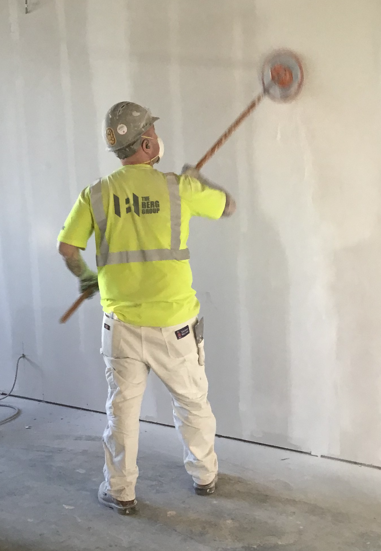
- Everyday nuisance dust comes from sweeping, moving dry materials, wood, or general debris.
- Crystalline silica hides in concrete, brick, block, mortar, and stone.
- Tiny particles float in the air where you cannot see them, getting deep into your lungs even if a heavy cloud is absent.
Why Control Basic Dust?
- Protect your breathing: Breathing heavy dust irritates your nose, throat, and lungs, leading to coughing or long-term breathing issues.
- Keep visibility clear: Less dust means a safer workspace with a clear view of equipment and hazards.
- Prevent buildup: Good habits stop dust from piling up and launching back into the air.
- Use water: Wet down work surfaces or use tools with water delivery attachments to trap dust before it flies.
- Capture at the source: Use vacuums with high-efficiency particulate air (HEPA) filters—which trap extremely small, harmful particles—on hand tools.
- Never dry sweep: Do not use a broom on dry dust, and never use compressed air to blow dust off your clothes or work areas.
- Clean safely: Use wet sweeping or a HEPA filter vacuum for cleanup.
- Wash up: Wash your hands and face before eating, drinking, or smoking after working in a dusty zone.
Silica dust exposure statement:
Raw materials in most All Purpose sheet rock and Joint Compounds, contain respirable crystalline silica as an impurity. The weight percent of respirable crystalline silica found in this product is < 0.7%. We have conducted industrial hygiene testing on several Joint Compound products which show that during application the dust generated usually had respirable crystalline silica content below the OSHA silica PEL or action level. Berg Group employees utilize hepa vacuum sanding systems, Clean sweep compounds, basic dust masks, air exchange systems and barricades with signage to minimize potential exposure to Dust and silica levels reaching OSHA action levels in areas where Berg Group and other project trades are working.
Berg Group has developed its dust/silica exposure plan based on results of employee testing, current industry work practices, Manufacture improvements to construction products utilizing silica as an ingredient, OSHA recommended mitigation and protection methods from its silica table 1 standard and evaluation of working locations by our competent site leadership and safety personal.
If you have further questions regarding Berg Group dust control and silica exposure procedures please contact your Berg Group supervisor or a Berg Group safety professional on your specific project.
**If you are a Contract or Brokered labor employee of the Berg Group. Please consult your company/employer specific dust and silica control plan. All dust and silica exposure plans and training must comply with OSHA standards, Berg Group policy and client/GC standards. Please reach out to your specific company supervisor or representative with questions concerning their company silica training and dust control plans.